


India has suspended the Indus Waters Treaty and barred the entry of Pakistani nationals, a day After Pahalgam attack, in Indian Illegally Occupied Jammu and Kashmir (IIOJK) killed at least 26 tourists. The sweeping measures, announced by the Ministry of External Affairs following a high-level meeting of the Cabinet Committee on Security, mark a sharp escalation in tensions between the two nuclear-armed neighbours.
Addressing the media in New Delhi, senior Indian diplomat Vikram Misri said that the Indus Waters Treaty of 1960 would be held in abeyance with immediate effect. He stated that the treaty will remain suspended until Pakistan “credibly and irrevocably abjures its support for cross-border terrorism.” The water-sharing agreement, brokered by the World Bank, has been a longstanding symbol of cooperation between the two countries, granting India control over the eastern rivers of the Indus basin, while Pakistan administers the western rivers.
As part of the new measures, the Integrated Check Post at Attari will be closed immediately, though those who have crossed into India with valid endorsements may return through the same route before May 1, 2025. Additionally, Pakistani nationals will no longer be permitted to travel to India under the SAARC Visa Exemption Scheme. All previously issued SVES visas to Pakistani citizens are now considered cancelled, and those currently in India under this scheme have been ordered to leave within 48 hours.
India has also declared the military, naval, and air advisors at the Pakistani High Commission in New Delhi persona non grata, requiring them to leave the country within a week. In a reciprocal move, India will withdraw its own defence advisors from the Indian High Commission in Islamabad. Furthermore, India will reduce the staff strength at its High Commission in Islamabad from 55 to 30 by May 1.
Read More: Security forces killed 6 Khwarij terrorists including ring leader: ISPR
These decisions follow Tuesday’s mass shooting in the scenic Baisaran Valley in the Pahalgam region of Jammu and Kashmir, where 26 civilians, including 25 Indian tourists and one Nepalese national, were killed and at least 17 others injured. Authorities have called it the deadliest attack on civilians in India since the 2008 Mumbai attacks, shattering a period of relative calm in the region that had recently seen a revival in tourism.
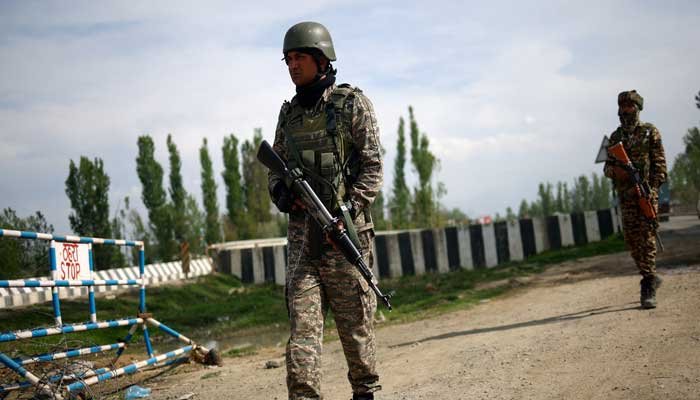
Security forces responded swiftly, launching a manhunt and combing operations in the surrounding forest areas. Around 100 individuals with previous links to insurgent activities were taken in for questioning. Police released sketches of three suspected attackers, described as wearing traditional long shirts and trousers, with one carrying a body camera. At the time of the attack, the valley reportedly hosted around 1,000 tourists and 300 local workers.
A group calling itself the “Kashmir Resistance” claimed responsibility via social media, citing anger over the settlement of more than 85,000 non-locals in the region, which they claimed was altering its demographic makeup.
Pakistan’s foreign ministry spokesperson, Shafqat Ali Khan, expressed concern over the loss of life in Pahalgam attack and offered condolences to the victims’ families. “We are concerned at the loss of tourists’ lives,” he said in a statement. “We extend our condolences to the near ones of the deceased and wish the injured a speedy recovery.”

Comments are closed.