

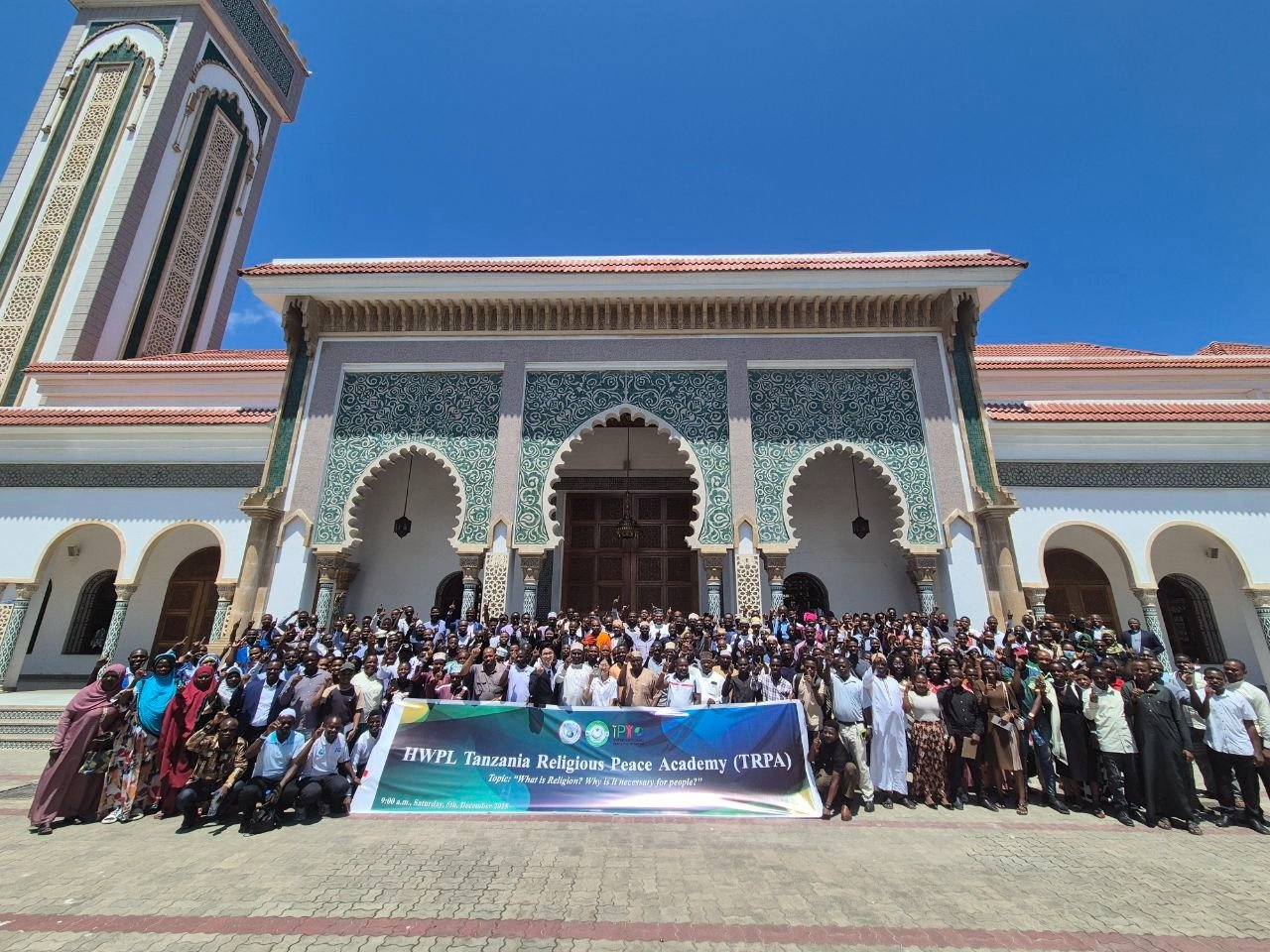

Dar es Salaam hosted the International Religious Peace Academy (IRPA) on 6 December 2025, bringing together 500 participants — including religious leaders, youth groups and community representatives — at an event organised by HWPL Tanzania, an international UN-affiliated NGO active in global peace initiatives.
The program was designed to deepen interreligious understanding and build stronger community bonds. It featured two structured sessions: a joint opening session focused on interfaith awareness, followed by group-based discussions dedicated to religion, education, peace policy and youth sectors.

The first session centred on the theme “Comparative Religious Doctrines and Their Application to Community Understanding,” outlining shared values across major faith traditions. The second phase allowed sector groups to examine practical applications, including ethical education models, community conflict-mediation experiences, and communication methods to address local tensions.
Organisers noted that the program’s design reflected Tanzania’s current social context, where urban poverty, rising youth unemployment, and limited interfaith communication have contributed to recurring local disputes. Government reports in recent years have highlighted increases in youth-related violence in Dar es Salaam and Arusha, as well as small-scale interreligious misunderstandings reported by local media.
In response, HWPL Tanzania has been conducting peace and ethics education at universities, interfaith dialogue forums, conflict-resolution workshops and community awareness initiatives guided by the DPCW framework.
A representative of JMAT, speaking at the opening, said, “Dar es Salaam’s multi-faith setting requires sustained spaces for dialogue, and continued engagement can support community stability.”
Read More: Religious Leaders from Middle East and Africa Join HWPL’s Online Peace Academy
Following the academy, HWPL Tanzania announced a long-term action plan that includes monthly dialogue meetings with faith communities and universities, co-development of peace and ethics education materials for youth, translation of IRPA resources for use in local religious institutions, and quarterly roundtables for religious leaders.
HWPL stated that these initiatives aim to address growing concerns about declining moral values, youth instability and communication gaps by establishing practical educational tools and durable collaborative structures.
