

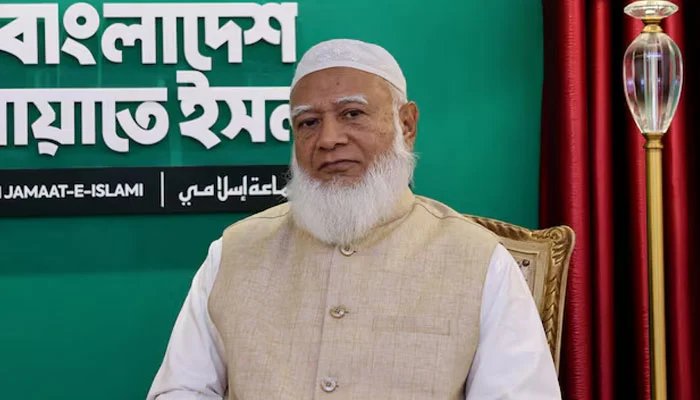

Dhaka: Shafiqur Rahman, 67, the chief of Jamaat-e-Islami (JI), has emerged as a significant contender in Bangladesh’s general election scheduled for Thursday. His political rise comes in the wake of the 2024 Gen Z-led uprising that led to the ouster of former Prime Minister Sheikh Hasina and opened space for previously banned political parties to participate in the electoral process.
Rahman, a doctor by profession, began his political journey in a leftist student organization before joining the Islami Chhatra Shibir, the student wing of JI. He formally joined Jamaat-e-Islami in 1984 and unsuccessfully contested national elections in 1996, 2001, and 2018. He became the party chief in 2020. Under Hasina’s government, JI faced severe restrictions, with its leaders jailed, some sentenced to death, and the party banned, forcing it to operate underground. Rahman himself was arrested in 2022 and spent 15 months in prison.
The 2024 uprising changed the political landscape. Days after Hasina fled to India, an interim government led by Nobel laureate Muhammad Yunus eased restrictions on JI, and in 2025, a court lifted the ban, allowing the party to re-emerge publicly. Since then, Rahman has traveled across Bangladesh, gaining media attention and consolidating his position as a serious contender for the prime ministership.
Rahman has presented JI as a moderate, clean, and moral alternative, emphasizing governance, anti-corruption, and social justice. He has also pledged equal treatment for all religions and sought to soften the party’s image, appealing to both conservative and younger voters. In December, JI allied with the Gen Z National Citizen Party, expanding its appeal to younger and less conservative segments of society.
Read More: Sindh Government Bans Photography in Girls’ Colleges
Born in the northeastern district of Moulvibazar, Rahman comes from a family of doctors. He is the founding chair of a hospital in Sylhet, and his wife and children are also medical professionals. Analysts note that his personal image of humility, discipline, and approachability has helped him gain voter trust and recognition.
With opinion polls suggesting JI is heading for its strongest performance yet, Rahman’s rise signals a potential shake-up in Bangladeshi politics. His campaign aims to challenge the Bangladesh Nationalist Party in a tightly contested election, and observers say his moderate stance and focus on governance may broaden the party’s appeal beyond its traditional support base.
