

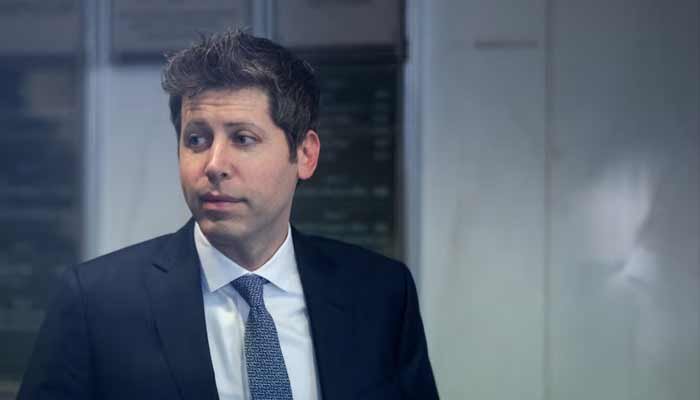

OAKLAND: Sam Altman on Tuesday strongly rejected allegations by Elon Musk that he abandoned OpenAI’s original mission of serving humanity, telling a California court that it was Musk who had repeatedly attempted to gain control of the artificial intelligence company for financial benefit.
The closely watched federal trial in Oakland, California, has entered its third week and could shape the future structure and leadership of OpenAI as the company prepares for a potential public offering reportedly valuing it at nearly $1 trillion.
Musk had filed a lawsuit in August 2024 accusing Altman and OpenAI President Greg Brockman of misleading him into contributing around $38 million to the organisation before allegedly transforming it from a nonprofit initiative into a profit-driven corporation.
Appearing before the court, Altman dismissed Musk’s claims that OpenAI’s leadership had attempted to “steal a charity”.
“It feels difficult to even wrap my head around that framing,” Altman told the court, adding that he hoped “as OpenAI continues to do well, the nonprofit will do even better.”
Musk, who is seeking around $150 billion in damages from OpenAI and its major investor Microsoft, has argued that artificial intelligence poses serious risks if controlled by individuals he considers untrustworthy. He is also seeking the removal of Altman and Brockman from their positions.
OpenAI was founded in 2015 by several technology entrepreneurs, including Musk and Altman, with the stated mission of developing AI for the benefit of humanity.
However, during testimony, Altman claimed Musk had supported plans for a for-profit structure and had even sought dominant control over the company.
According to Altman, Musk at one stage demanded a 90% stake in OpenAI and consistently pushed for majority control, something Altman said made him “extremely uncomfortable”.
“I had quite a lot of experience with startups, had seen a lot of control fights,” Altman said, referencing Musk’s leadership style at SpaceX.
Altman further testified that he opposed proposals to merge OpenAI with Tesla, arguing such a move would compromise the organisation’s broader mission.
“I don’t think we would have had the ability to ensure that mission was acted on,” he said. “Fundamentally, Tesla needs to serve its customers and sell cars.”
The court also heard testimony from OpenAI chairman Bret Taylor, who revealed that a consortium led by Musk’s AI company xAI submitted a takeover proposal for OpenAI’s nonprofit arm in February 2025.
Taylor said he was surprised by the offer, calling it contradictory to the principles behind Musk’s lawsuit.
“This proposal was to acquire this non-profit by a group of for-profit investors, which felt contradictory to the spirit of the lawsuit,” Taylor told the court.
Altman also described internal tensions during Musk’s time at OpenAI, saying some researchers felt demoralised by Musk’s management style and constant demands to justify research progress.
“I don’t think Mr Musk understood how to run a good research lab,” Altman testified.
The trial has drawn global attention as major figures from the technology sector continue to testify. Former OpenAI chief scientist Ilya Sutskever recently told the court he had documented what he described as a “consistent pattern of lying” by Altman, while Microsoft chief executive Satya Nadella defended the company’s massive investment in OpenAI as a “calculated risk”.
Jurors are expected to begin deliberations later this month following the conclusion of testimony.
