

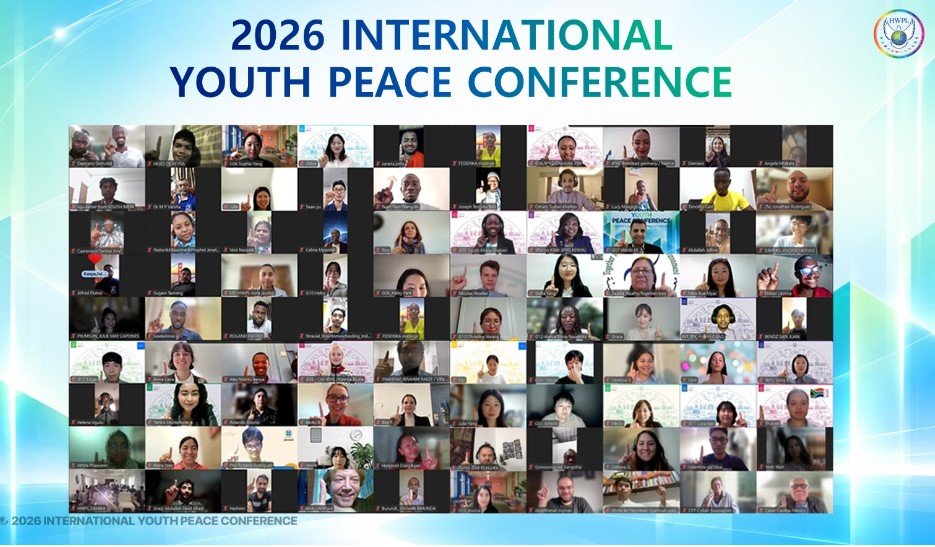

An international peace organisation, Heavenly Culture, World Peace, Restoration of Light (HWPL), hosted the 2026 International Youth Peace Conference online on October 10, bringing together young leaders from around the world to discuss peacebuilding and human rights.
Held under the theme “Global Youth Leaders Taking Action for Peace and Human Rights”, the conference provided a platform for young people to share their peacebuilding activities over the past year and explore practical ways to advance peace in their communities.
The event opened with a presentation on the 2026 achievements of the International Peace Youth Group (IPYG), followed by an overview of the HWPL International Youth Peace Program held in South Korea from September 17 to 19.
The three-day programme followed a “Discover-Learn-Act” approach and brought together 100 youth leaders from 40 countries. Participants explored South Korea’s cultural heritage and took part in lectures, discussions and experiential activities to learn about peace and identify ways to apply their experiences in their respective communities.

The conference also highlighted IPYG’s expanding international network. According to the organisation, it currently collaborates with 1,890 youth organisations across 133 countries.
Regular meetings of the Youth Engagement & Peacebuilding Working Group (YEPW), through which young people plan and implement peace activities tailored to their local communities, were held more than 500 times this year, the presentation said.
The organisation also reported that approximately 12,000 young people from 89 countries had participated in its Youth Empowerment Peace Class (YEPC).
The non-formal peace education programme aims to address gaps in educational opportunities for young people by helping them understand the value of peace and encouraging them to put it into practice in their communities.
Reflecting on IPYG’s achievements, Salif Bouné, founder of the Association of Pupils and Students from the Commune of Diaye Couras in Mali, said the organisation’s peacebuilding efforts had been a source of motivation.
“Seeing these men of peace who have spent their entire careers traveling the world, meeting people in a voluntary manner, and speaking to them about peace, truly motivated us a lot,” he said.
The activities highlighted how young people are moving beyond expressing support for peace to actively participating in its promotion. Participants discussed local challenges, developed initiatives and explored ways to strengthen their roles as peacebuilders.
The conference concluded with a performance incorporating music and light. Participants raised the lights on their mobile phones and waved their hands in a collective expression of their desire for peace.
Addressing participants, the organisers emphasised the importance of collective action, saying individual voices could create meaningful change when united with others.
Siju Thomas Daniel, founder of the SCEAD Foundation in India, said he hoped to apply what he had learned at the conference over the coming year.
“I want to bring change starting from this conference, with what I have learned, from today until next year. My aim is to get all the youngsters to come forward and talk about world peace,” he said.
The conference provided an opportunity for youth leaders to review their peacebuilding activities and reaffirm their commitment to promoting peace in their respective communities.
HWPL and IPYG expressed the expectation that continued youth engagement and locally driven initiatives would help strengthen peacebuilding efforts and advance human rights around the world.
