

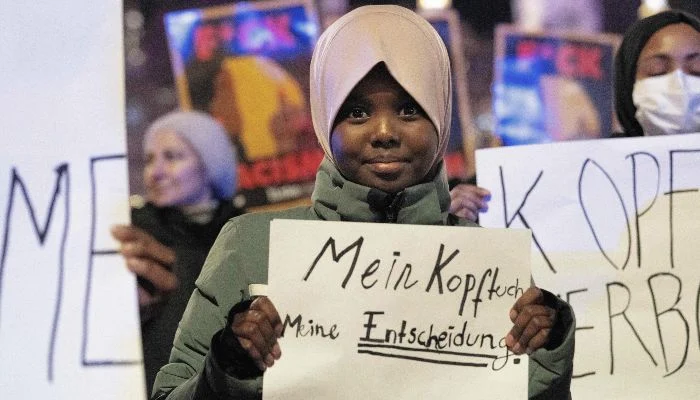

VIENNA: A headscarf ban for girls under the age of 14 in Austrian schools has triggered unease, anger and fears of increased targeting of Muslims, as the measure is set to take effect from the upcoming school year in September.
The law, approved by Austrian lawmakers in December, is being defended by the conservative-led government as a step to protect young girls from what it describes as “oppression.” However, rights groups, educators and legal experts argue that the move is discriminatory and could further divide society.
According to official estimates, around 12,000 girls may be affected, though critics have questioned the accuracy of the figure. Muslims make up roughly 8% of Austria’s population, based on government data.
Guidelines issued by the education ministry instruct teachers to ask students to remove headscarves if found in violation of the ban. In cases of non-compliance, the matter must be reported to school administration, followed by a meeting with parents or guardians. Repeated violations could result in fines ranging from 150 to 800 euros.
The directives also warn of legal consequences for teachers and school officials who fail to enforce the law, adding further pressure on educational institutions.
Some educators have expressed reluctance to implement the policy. One Vienna-based teacher described the measure as “populist,” arguing that it does not address broader issues such as domestic pressure or abuse that may affect children across all communities.
The ban has also prompted protests in Vienna, where demonstrators gathered last month to voice opposition. Activists say the policy reflects a pattern of discrimination and undermines religious freedoms.
Austria has experienced rising anti-immigration sentiment in recent years, with the far-right Freedom Party gaining significant support in the 2024 elections. Rights groups have warned that Muslims in the country face among the highest levels of discrimination within the European Union.
The Islamic Religious Community in Austria has indicated it will challenge the law in court, citing constitutional concerns. A similar ban introduced in 2019 was previously struck down by Austria’s constitutional court on the grounds that it unfairly targeted a specific religious practice.
Families affected by the new measure say it has already created anxiety among children, with some students expressing anger and confusion over the policy.
Observers say the legal battle ahead could prove decisive in determining whether the ban remains in force, as debate over religious freedoms and integration continues in Austria.
