

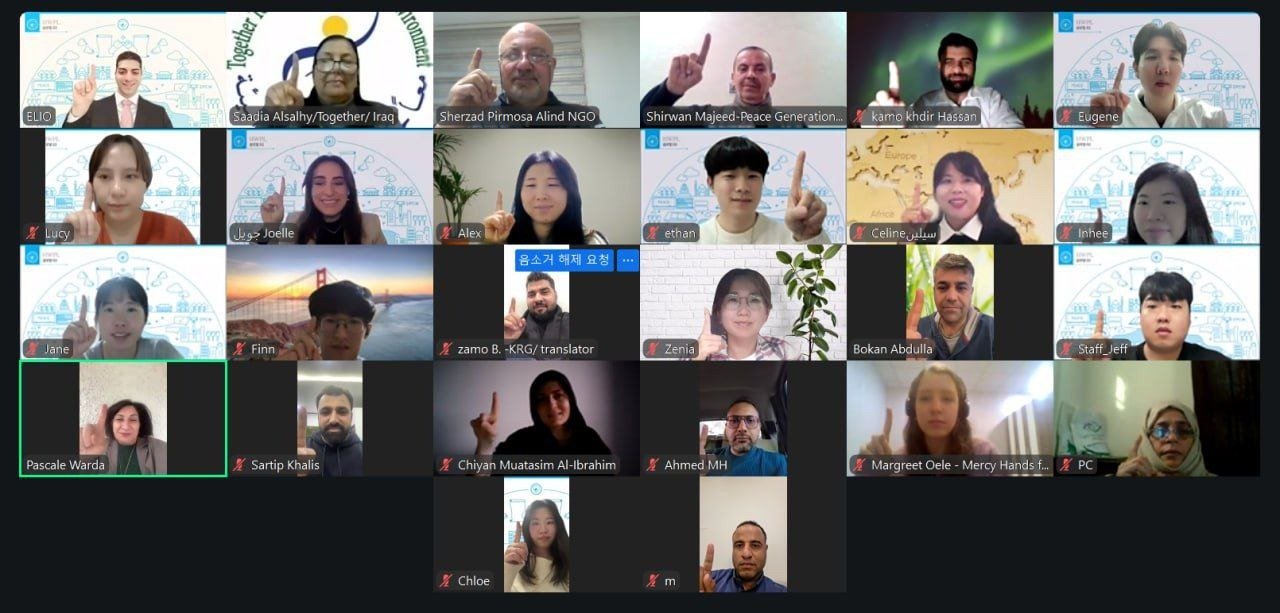

Heavenly Culture, World Peace, Restoration of Light (HWPL), a UN-affiliated international NGO, has held an international online forum titled “International Online Forum for the Realization of Peace in the Middle East: Building Sustainable Peace through Community Cooperation,” bringing together former and current officials and civil society representatives from Iraq and across the Middle East.
The forum focused on peacebuilding approaches rooted in local realities, highlighting the role of community cooperation in post-conflict recovery. Iraq’s history of coexistence among diverse religious and ethnic groups was discussed, with the 1988 Halabja massacre cited as a critical reference point in conversations on national reconciliation and human rights protection.
As Iraq continues its post-conflict recovery, speakers noted that cooperation among local governments, religious communities and civil society organisations has gradually expanded around peace and reconciliation initiatives. HWPL said the forum was designed to place local experiences and perspectives at the centre of regional peace discussions.
During the event, HWPL officially announced the launch of the Middle East Peace Implementation Committee. The committee is envisioned as a permanent platform bringing together civil society representatives, religious leaders and professionals from legal and administrative sectors across the Middle East. Its aim is to develop frameworks for embedding a culture of peace in post-conflict societies through sustained, region-led consultation rather than one-off initiatives.
Pascal IshoWarda, former Iraqi minister of migration and displacement and now a civil society activist, said peace in the Middle East could not be achieved through external intervention alone. He stressed that lasting peace must begin with rebuilding trust and solidarity within local communities and called for shared standards for coexistence that move beyond past tragedies.
Following the forum, HWPL announced next steps, including advancing the establishment of the Middle East Peace Implementation Committee with a focus on Iraq. Plans include regular online roundtables, issue-specific working groups involving participating leaders, and an offline event in Iraq in January 2026 to enable direct engagement among civil society actors, religious leaders and legal professionals.
HWPL said these follow-up actions are intended to create a step-by-step, sustainable framework for peace cooperation in the Middle East, driven by regional stakeholders and grounded in local contexts.
