

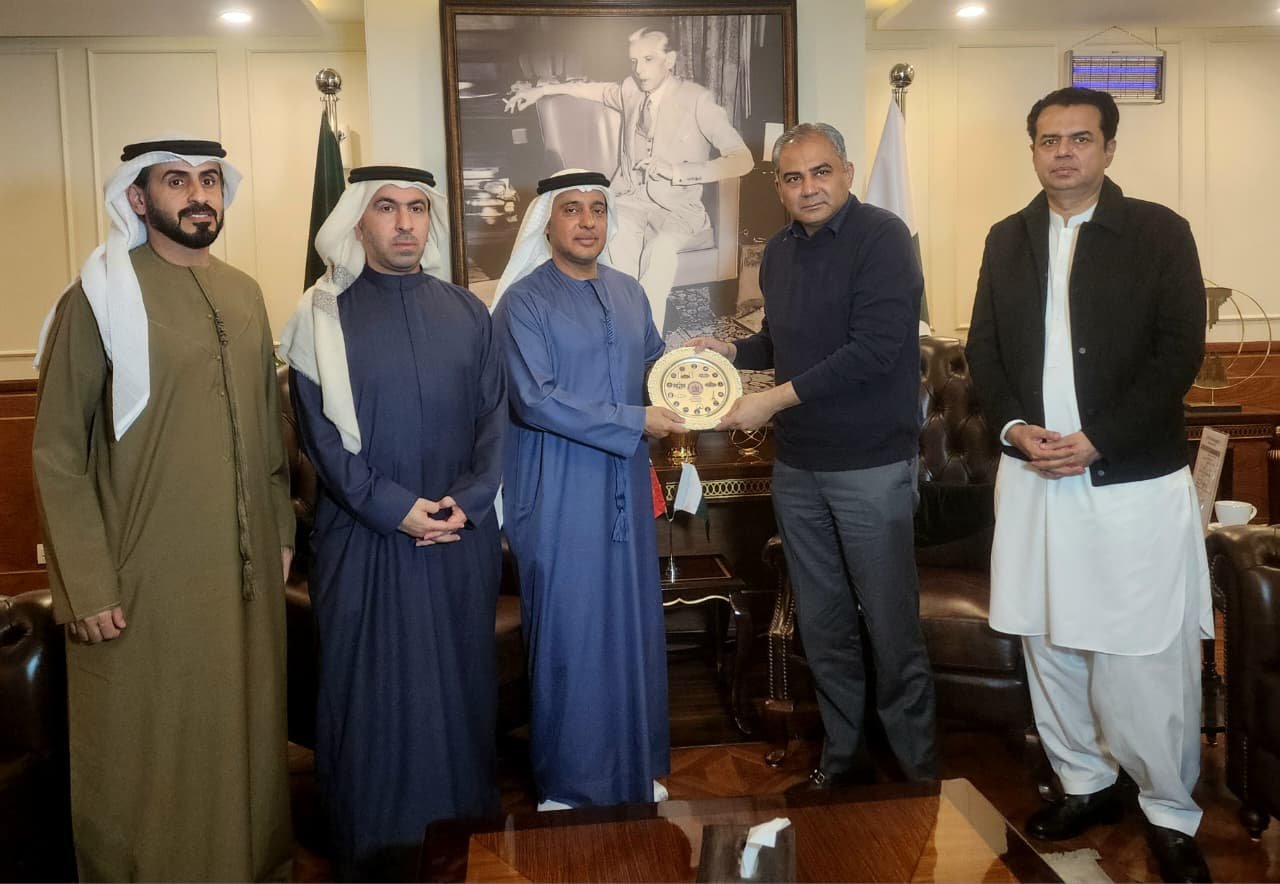

ISLAMABAD: Pakistan and the United Arab Emirates have agreed to sign a pre-immigration clearance agreement that will allow UAE-bound passengers to complete immigration formalities in Pakistan and exit airports in the Gulf country directly, similar to domestic travellers.
The development came during a meeting between Interior Minister Mohsin Naqvi and a UAE delegation led by Director General of Customs Al Dara Border Crossing Ahmed Abdullah Bin Lahej Al Falasi. Under the arrangement, a new immigration system will be launched initially on a pilot basis, with Karachi selected for the first phase.
Once implemented, passengers will no longer have to undergo lengthy immigration procedures upon arrival in the UAE. The interior minister said the initiative would make travel more convenient, save time and significantly improve the overall passenger experience. If the pilot project proves successful, the system will be expanded to other locations in phases.
The move comes amid recent incidents of passengers being offloaded due to improper or incomplete documentation, following stricter measures by authorities to curb human trafficking and illegal travel. Last week, the interior minister directed authorities to enforce rigorous screening of travel documents at all airports and instructed the FIA to strengthen immigration systems and ensure strict implementation of immigration laws.
Earlier this month, the government also launched Pre-Departure Facilitation Desks to assist passengers travelling abroad. The desks provide guidance on immigration procedures and clearances and are accessible in person, through helplines and via email, with details available at airports, border points and on the FIA website.
The initiative is being rolled out against the backdrop of a large number of Pakistanis travelling overseas for employment. According to data from the Bureau of Immigration, more than 727,000 Pakistanis migrated abroad for work in 2025, spanning all skill levels. Of these, over 466,000 were unskilled workers, while more than 222,000 were skilled and 42,000 semi-skilled.
Saudi Arabia remained the top destination, absorbing more than 530,000 Pakistani workers, followed by Qatar, the UAE and Bahrain. Smaller numbers migrated to Kuwait, the United States, the UK, Germany, Italy, China, Japan and Romania, with only a limited number heading to South Korea.
