

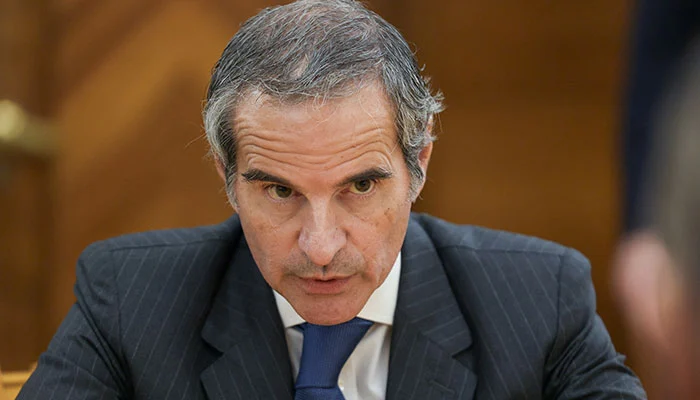

ISLAMABAD: The United States and Iran are expected to hold negotiations covering issues “broader in scope” in Islamabad this weekend, International Atomic Energy Agency Director General Rafael Grossi said on Wednesday.
According to remarks reported by Anadolu Agency, citing an interview with an Italian newspaper, the upcoming talks are likely to include discussions on missile programmes, Iran-aligned militias and security guarantees for Tehran.
Grossi said the agenda would go beyond previous engagements, adding that missiles, allied militias and security assurances for Iran would be part of the negotiations. He also emphasised the need to avoid military options, suggesting that a temporary diplomatic arrangement could be achievable.
He noted that alternative diplomatic plans could allow for a pause in uranium enrichment under current political and security conditions, with the possibility of revisiting the issue in the future.
The development comes amid ongoing efforts to create a diplomatic breakthrough to end the nearly month-long conflict involving the United States, Israel and Iran, which began on February 28 and has impacted the wider Middle East region.
Pakistan has emerged as a key intermediary, working in coordination with Turkiye and Egypt to facilitate back-channel communication between Washington and Tehran in a bid to prevent further escalation.
These efforts included direct contact between Chief of Army Staff Field Marshal Asim Munir and US President Donald Trump, which was confirmed by the White House.
Prime Minister Shehbaz Sharif has also offered Islamabad as a venue for talks between the two sides, a move acknowledged by the US leadership. Reports indicate that Pakistan recently delivered a US proposal to Iran as part of its mediation efforts.
However, prospects for progress remain uncertain, as Iran has rejected the US proposal, stating it would end the ongoing conflict only on its own terms and timeline.
Iranian officials have outlined key conditions for ending the war, including a complete halt to hostilities, guarantees against future aggression, payment of reparations, resolution across all fronts and international recognition of Iran’s authority over the Strait of Hormuz.
Despite diplomatic momentum, significant differences persist between the two sides, raising questions over the outcome of the expected talks.
