


Washington: The final report by the US Special Inspector General for Afghanistan Reconstruction (SIGAR) has laid bare the scale, costs and failures of America’s 20-year war and reconstruction effort in Afghanistan, concluding that corruption, flawed policies and structural weaknesses ultimately undermined state-building efforts.
According to the report, the decision to sideline the Afghan government during the US–Taliban Doha negotiations significantly weakened Afghanistan’s state institutions and legitimacy, contributing to the eventual collapse of the government.
Between 2002 and 2021, the United States allocated $144.7 billion for Afghanistan’s reconstruction, of which $137.3 billion was spent. The report noted that reconstruction spending in Afghanistan exceeded the inflation-adjusted cost of the Marshall Plan, which rebuilt Europe after World War II.
Despite the massive investment, corruption within successive Afghan governments emerged as the single biggest obstacle to reconstruction. The report said billions of dollars were lost to graft, mismanagement and waste, eroding public trust and weakening governance.
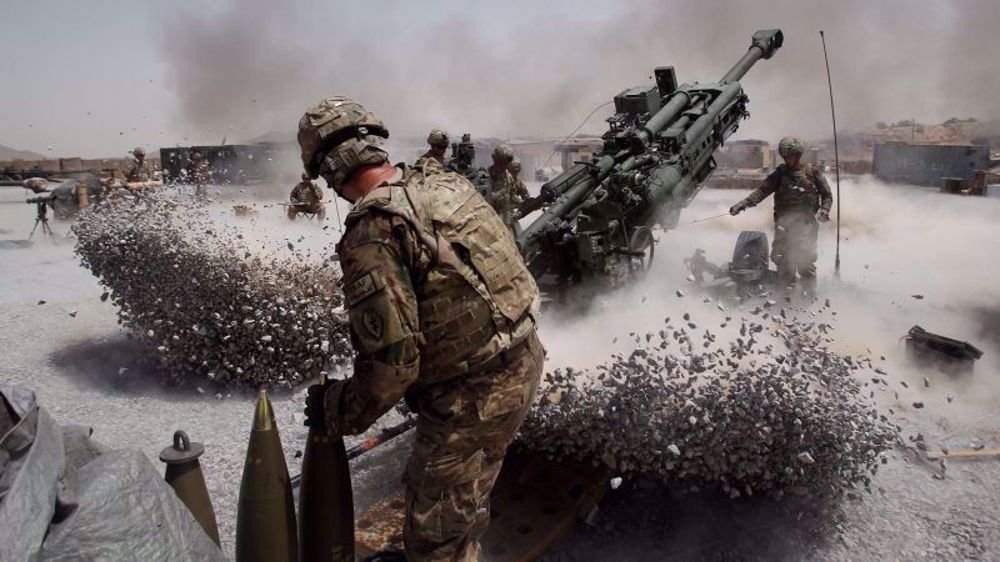
In addition to reconstruction funds, the US spent a further $763 billion on military operations in Afghanistan. Around $90 billion was allocated to build Afghan security forces, but the report found that they failed to become self-reliant and remained dependent on foreign support. Following the US withdrawal, Afghan forces rapidly collapsed.
SIGAR highlighted systemic problems within Afghan security institutions, including the presence of thousands of “ghost” personnel, large-scale theft of fuel, and poor accountability. The US purchased about 147,000 vehicles and thousands of pieces of military equipment for Afghan forces, along with 427,300 weapons and 162 aircraft. After the withdrawal, military equipment worth $7.1 billion was left behind in Afghanistan.
The report said the World Bank and the Asian Development Bank pledged $12.16 billion for Afghanistan, while US counter-narcotics programmes consumed $7.3 billion but failed to curb drug production. Similarly, $4.7 billion spent on stabilisation programmes delivered disappointing results.
Human costs of the war were also highlighted, with more than 2,450 US soldiers killed and over 20,700 wounded during the conflict. Following the withdrawal, $14.2 billion was allocated for relocating Afghan refugees to the United States.
The report further revealed that after the fall of Kabul, the US provided $3.83 billion in assistance to Afghanistan over four years, including $120 million in a single quarter in March 2025. Global donors also channelled $8.1 billion through United Nations-managed projects after the US exit, while six projects worth $1.5 billion remain active under the Afghanistan Reconstruction Trust Fund.
SIGAR noted that the Taliban administration continued to impose taxes and levies on humanitarian and development assistance, raising concerns over oversight and aid effectiveness.
The report concludes that despite unprecedented spending, the US and its partners failed to build sustainable Afghan institutions, warning that the lessons of Afghanistan highlight the limits of military-led nation-building and the risks of ignoring local governance realities.
