

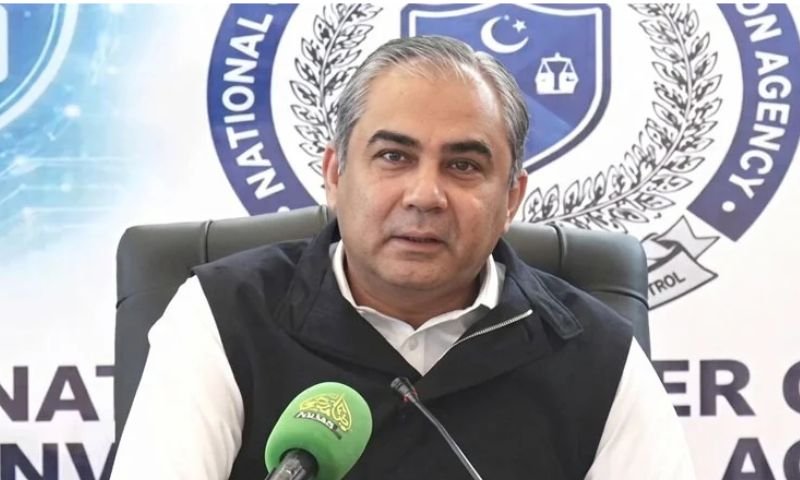

LAHORE: Interior Minister Mohsin Naqvi has proposed holding a referendum on the creation of new provinces, saying the matter should ultimately be decided by the people rather than prolonged political disagreement.
Speaking to reporters in Lahore, Naqvi said political parties could have differing views on the issue, but public opinion should be sought to bring the debate to a conclusion.
“We all talk about democracy and say that the people are supreme,” he said, urging political parties to consider holding a referendum.
“If the people say new provinces should not be created, I will be 100 per cent with them that they should not be created. If the people say they should be created, then they should be created,” he added.
Naqvi said surveys and public discussions appeared to indicate support for the creation of new provinces, but maintained that formally seeking the people’s opinion was the most appropriate way forward.
He said political parties, including the Pakistan Peoples Party (PPP), had their own positions on the matter, while some had yet to publicly clarify their stance. He added that if political parties believed there was a better mechanism than a referendum, they should present that proposal to the public as well.
The interior minister stressed that no decision on such a politically sensitive issue would be imposed unilaterally, saying the PPP, Pakistan Muslim League-Nawaz (PML-N) and other coalition partners were important stakeholders.
“Nothing will happen through disagreement,” he said, adding that any major decision would be taken collectively with the agreement of the relevant political stakeholders.
Responding to questions about notices issued over alleged encroachments and reports concerning Jamiat Ulema-e-Islam-Fazl chief Maulana Fazlur Rehman, Naqvi rejected the impression that any single political figure was being specifically targeted.
He said notices had been issued to “five or six thousand” people and that the campaign had been under discussion in the media for the past four to five months.
“The notices have not been issued only to Maulana Fazlur Rehman,” he said.
Naqvi said those affected would have access to legal remedies, but expressed concern over what he described as widespread illegal occupation of land in Islamabad. He said encroachments on federal capital land had reached an unprecedented scale, adding that those facing action would be entitled to pursue their cases through legal channels.
Asked about political tensions and allegations of selective accountability, Naqvi referred to PPP Chairman Bilawal Bhutto Zardari’s remarks about a possible “reset” in political matters. He said broader issues needed to be reset and that he and Bilawal appeared to be “almost on the same page”.
However, he maintained that action against corruption should not be viewed as politically motivated simply because it involved particular individuals or institutions.
“If anyone says there is no corruption in Pakistan, then, with apologies, corruption exists across Pakistan,” he said, adding that the government was responsible for identifying corruption through evidence and taking action against those responsible.
Naqvi said the Interior Ministry was also taking action within its own ranks despite efforts to maintain strict oversight. He added that corruption should be acknowledged wherever it existed, including within the Capital Development Authority (CDA).
Referring to accountability in government departments, he said law enforcement agencies were investigating major cases involving the CDA. Authorities had also taken action against a government officer, while some officials had been removed or were facing further proceedings.
He urged caution over material circulated on social media, saying videos and other content were sometimes repeatedly amplified in ways that could contribute to propaganda or misinformation.
Earlier, Naqvi praised the National Cyber Crime Investigation Agency (NCCIA), saying its limited resources placed considerable pressure on its personnel given the scale of its responsibilities.
He highlighted what he described as a major international examination fraud, alleging that a gang had helped around 5,000 Pakistanis pass examinations linked to international institutes through dishonest means.
He said authorities planned to take action against both the gang and those who had benefited from the alleged fraud. Describing it as a major scam that could have damaged Pakistan’s interests internationally, Naqvi credited NCCIA Director General Atif Ikram Sheikh and his team for uncovering the case.
The minister also said authorities had arrested 15 people over the past month in cases linked to an alleged online pornography business. He said the suspects were based in Pakistan, particularly Lahore, and were allegedly connected with international websites.
Naqvi said authorities were determined to act against those involved, adding that investigations had also covered other cases involving alleged scams, call centres and child victims.
He said providing cybercrime authorities with stronger resources would help the government better control such activities and dismantle networks operating from Pakistan.
