


ISLAMABAD: The International Monetary Fund (IMF) has raised questions over Pakistan’s agricultural income tax collection and the Federal Board of Revenue’s (FBR) ability to meet its revenue targets as Islamabad began formal discussions with the Fund on its latest programme reviews, according to sources familiar with the talks.
Pakistan and the IMF formally began discussions on Tuesday for the fourth review of the $7 billion Extended Fund Facility (EFF) and the third review of the separate $1.4 billion Resilience and Sustainability Facility (RSF), with Pakistan seeking about $1.2 billion in fresh disbursements.
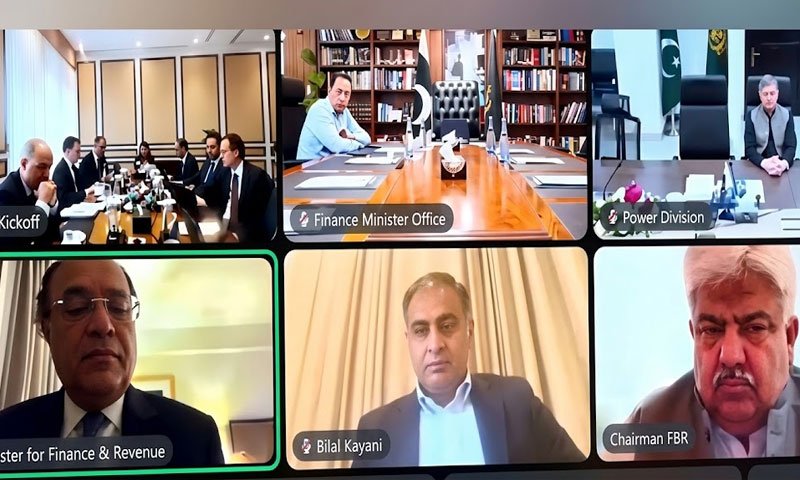
Finance Minister Muhammad Aurangzeb held a kick-off meeting with an IMF mission led by Iva Petrova, according to the finance ministry.
The IMF has raised concerns over the collection of agricultural income tax despite Pakistan increasing the rate to 45 per cent from 15 per cent, the sources said.
The provinces failed to meet their agricultural income tax collection targets during the last fiscal year. Sindh collected Rs1.1 billion against a target of Rs2 billion, while Punjab collected Rs4 billion against a target of Rs10.5 billion.
For the current fiscal year, Sindh has set an agricultural income tax collection target of Rs6 billion, while Punjab’s target stands at Rs12.5 billion.
According to the sources, there are concerns that Sindh could fall at least Rs3 billion short of its target this year.
The IMF also questioned the FBR over its failure to meet its tax collection target during the last fiscal year, when the tax authority fell Rs929 billion short of its revised target, the sources said.
The FBR assured the Fund that it would meet key reform targets, including digital invoicing and monitoring of production lines. The tax authority also expressed confidence that it would achieve its first-quarter collection target of Rs3.053 trillion by the end of September.
However, the FBR did not provide a final assurance that it would meet its full-year tax collection target of Rs15.263 trillion, citing regional security conditions as a potential risk to revenue collection.
The IMF also expressed concern over the low response from traders to the government’s second fixed-tax scheme.
The government told the Fund that it wanted to provide traders with a final opportunity to comply before imposing penalties or launching a crackdown, according to the sources.
On agricultural income tax, the FBR provided data on 44,350 individuals who declared agricultural income in tax year 2025.
Sindh has also stressed the need for real-time data sharing between the FBR and the Sindh Revenue Board to improve agricultural income tax collection.
The administration of agricultural income tax in Sindh has been transferred from the Board of Revenue to the Sindh Revenue Board, while the province has completed 3,650 registrations through digital registration and return filing. A total of 1,912 agricultural income tax returns have been filed, the sources said.
The IMF mission arrived in Islamabad on September 23 and has held discussions with officials from the State Bank of Pakistan, Finance Ministry, FBR, Establishment Division and finance departments of Punjab and Khyber Pakhtunkhwa.
The review is assessing Pakistan’s progress under both the EFF and RSF, including revenue mobilisation, fiscal consolidation and structural reforms.
Successful completion of the reviews could unlock about $1 billion under the EFF and $200 million under the RSF, although any disbursements would remain subject to approval by the IMF Executive Board.
Aurangzeb briefed the IMF team on recent macroeconomic indicators, improvements in Pakistan’s credit rating and the investment climate, according to the finance ministry.
Revenue collection and the economic impact of regional conflict were also among the issues discussed during the initial meetings. Sources said disruptions linked to the conflict and higher fuel prices had affected economic activity and tax collection.
Structural reforms
One of the outstanding issues under the IMF programme is legislation governing Pakistan’s sovereign wealth fund.
The government missed an end-March deadline to amend the Sovereign Wealth Fund Act to strengthen governance mechanisms and safeguards covering seven state-owned enterprises.
The companies include Oil and Gas Development Company Ltd, Pakistan Petroleum Ltd, Mari Petroleum, National Bank of Pakistan, Government Holdings, Pakistan Development Fund and the Neelum-Jhelum Hydropower project.
The assets covered by the proposed amendments are valued at about $8 billion, with the amendments still awaiting parliamentary approval, according to the sources.
The government has also taken steps on public procurement reforms ahead of the review.
It notified the new Public Procurement Rules 2026 on Monday, making use of the E-Pak Acquisition and Disposal System mandatory for federal procurement and introducing measures covering competition, conflicts of interest, blacklisting and grievance redressal.
The IMF had previously raised concerns over preferential treatment for state-owned enterprises under rules allowing direct contracting with them in certain circumstances.
The Fund is also expected to assess Pakistan’s progress on tax reforms, fiscal consolidation, state-owned enterprises, the energy sector and other structural measures agreed under the programme.
The government is seeking to demonstrate that it remains on track with its IMF commitments despite the economic impact of regional instability.
Pakistan has previously received waivers for some missed targets under its IMF programme, while authorities have also sought flexibility over reforms affected by circumstances beyond their control.
The current EFF was approved by the IMF Executive Board in September 2024 as a 37-month programme worth about $7 billion. The RSF was approved for Pakistan in March 2025 and is worth about $1.4 billion.
The latest review is expected to continue for several weeks before the IMF mission and Pakistani authorities can reach a staff-level agreement. Any agreement would subsequently require approval by the IMF Executive Board before the funds are released.
