

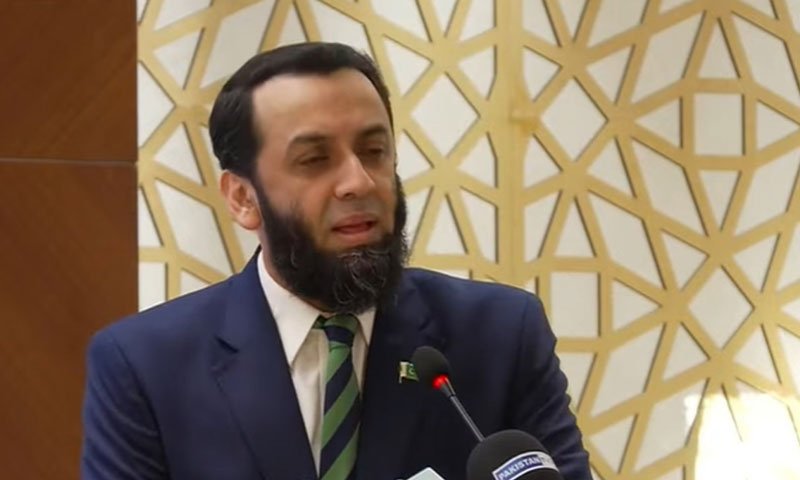

ISLAMABAD: Information Minister Attaullah Tarar on Tuesday urged Afghanistan’s interim government to abandon what he described as a “militant mindset” and work towards the betterment of its people and lasting regional peace, warning that Pakistan’s desire for peace should not be mistaken for weakness.
Addressing a conference in Islamabad on Afghanistan and prospects for peace, Tarar said Pakistan wanted peaceful coexistence with its neighbour, but a sustainable resolution to longstanding tensions required a change in the Afghan government’s approach.
“The Afghan interim government needs to move out of its militant mindset into a mindset of a statesman or a state,” he said.
Tarar said Pakistan had repeatedly pursued negotiations to resolve disputes with Afghanistan and had dispatched several high-level delegations to Kabul. Talks had also been held in Istanbul and Doha, he added.
“Pakistan believes in peace, Pakistan has always believed in peace and we believe in peaceful coexistence,” the minister said, questioning whether the Afghan government had the will to achieve peace.
Relations between the two countries have deteriorated amid Pakistan’s allegations that Afghanistan’s Taliban authorities allow militants to operate from Afghan territory. Kabul has rejected the accusations, while cross-border attacks and Pakistani strikes inside Afghanistan have further heightened tensions.
Militancy and regional trade
Tarar said Afghanistan had considerable potential to serve as a regional trade corridor connecting landlocked Central Asian states with Pakistan’s seaports, including Karachi and Gwadar.
He said peace and stability would enable the establishment of trade routes through Afghanistan, creating opportunities for economic growth and prosperity in both countries.
“If peace is achieved and we are able to create an environment where trade routes can be established from Central Asia through Afghanistan to Pakistan, people of both countries will be able to prosper,” he said.
The minister identified violent extremism and militancy as the principal obstacles to regional connectivity, alleging that Afghanistan continued to provide safe havens to terrorists and members of internationally proscribed organisations.
Pakistan has repeatedly accused the Afghan Taliban authorities of allowing the banned Tehreek-e-Taliban Pakistan (TTP) to operate from Afghan soil, a charge Kabul denies.
Tarar said Islamabad had raised the issue during negotiations, stressing that any lasting agreement must address Pakistan’s security concerns through a viable and sustainable framework.
Rights and economic development
The information minister also criticised policies of Afghanistan’s interim government that he said had restricted sections of the population from participating in economic and social life.
Referring to Afghanistan’s young population, Tarar said the exclusion of women from the workforce and restrictions on opportunities for sections of society were undermining the country’s economic development.
He said Afghans deserved access to education, freedom of assembly and association, peaceful coexistence and economic opportunities.
“That disconnect between the government and the citizen has led to a lot of problems within Afghanistan where people are now raising their voice for a change,” he said.
Tarar described the situation as involving two forms of denial: a failure to acknowledge the problem of terrorism and alleged militant safe havens, and restrictions on the fundamental rights of the Afghan population.
He said Afghanistan’s interim government would eventually have to recognise the need to change its approach and prioritise the welfare of its people.
“Only peace can lead to prosperity,” he said.
Pakistan warns against attacks
Tarar said Pakistan had continued to pursue dialogue despite repeated security concerns but had also responded militarily to attacks it attributed to militant groups operating from Afghan territory.
He said Islamabad had repeatedly conveyed its reservations about the use of Afghan soil for attacks inside Pakistan and the alleged support received by proscribed militant organisations.
Pakistan carried out air strikes on 10 locations in Afghanistan on September 23 and 24, saying the targets were involved in launching or storing drones used against Pakistan. Afghan authorities said the strikes killed civilians and denied involvement in the attacks.
Tarar maintained that Pakistan would continue to respond to attempts to undermine its security.
“Pakistan’s desire for peace must not be misconstrued as its weakness,” he said.
He added that any attempts to destabilise Pakistan would be met with a response.
Despite the tensions, the minister said Pakistan remained committed to finding an amicable solution through negotiations and diplomatic engagement.
Regional connectivity and cooperation
Tarar said lasting peace in Afghanistan could unlock significant economic opportunities across the region, particularly by strengthening trade and investment links between Pakistan and Central Asian countries.
He said representatives of Russia and Central Asian states understood the economic potential of regional stability and improved connectivity.
“If peace is achieved within the region then sky is the limit,” he said, adding that trade would increase and investment opportunities would expand.
The minister reiterated that access to Karachi and Gwadar through regional trade routes had long been a priority for Central Asian states and could become a reality if security challenges were resolved.
He also highlighted the longstanding ties between Pakistan and Afghanistan, noting that Pakistan had hosted millions of Afghan refugees over several decades.
“Pakistan and Afghanistan are neighbours, have been neighbours, will always be neighbours,” Tarar said.
He said Pakistan would continue to support dialogue and negotiations aimed at securing an acceptable and peaceful resolution, adding that the people of Afghanistan deserved a more prosperous future and a meaningful voice in determining their country’s direction.
