

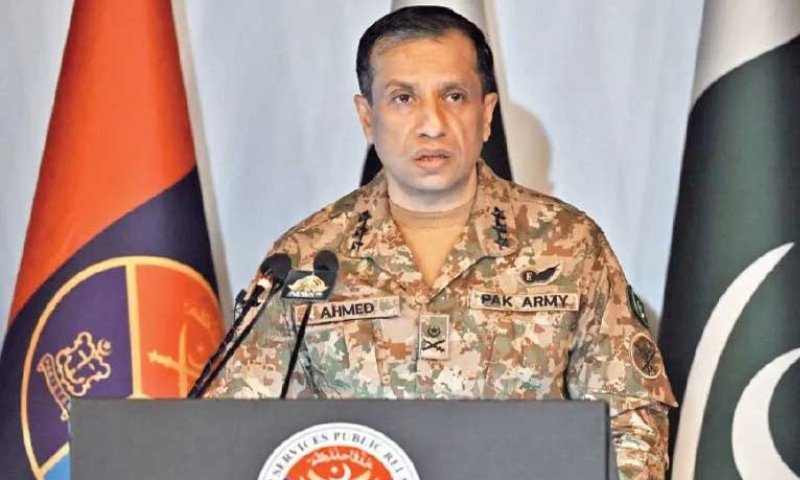

WEB DESK: The Inter-Services Public Relations (ISPR) has rejected an Indian documentary on “Operation Sindoor”, accusing New Delhi of using propaganda to portray what Pakistan described as a military setback as a successful operation.
The first part of the two-part documentary Declassified: Operation Sindoor was aired on Discovery Channel India and Discovery+ on August 15. The production has also been endorsed by Indian UAV manufacturer Raphe mPhibr.
In a statement, ISPR described the documentary as a “highly dramatised, coloured and factually inaccurate account” of the operation, alleging that it relied on selectively edited interviews, emotional narration and cinematic reconstruction to alter established facts and present a different version of events.
The military’s media wing said the documentary featured senior Indian political and military leadership but lacked what it described as nuance and seriousness, calling the production “a tragedy and a comedy at the same time”.
ISPR said the documentary contained “fundamental contradictions” that, according to the military’s media wing, exposed an attempt to create a version of events acceptable to the Indian public.
The statement particularly questioned the documentary’s attempt to link an address by Chief of Army Staff Field Marshal Asim Munir on April 16, 2025, to the Pahalgam incident of April 22, 2025.
ISPR described the linkage as an attempt at “conjuring a conspiracy theory out of nothing”.
The military’s media wing noted that India had separately claimed that the three alleged perpetrators of the Pahalgam attack were identified and killed on July 28, 2025, 82 days after the operation.
It questioned how the operation launched on May 7, 2025, could have been presented as punishment for those responsible if India’s own account placed their identification and elimination much later.
ISPR also rejected India’s reported claim of “100 percent mission success”, saying Pakistan’s armed forces had successfully thwarted Indian military action during Marka-e-Haq.
According to ISPR, Pakistan shot down eight Indian military aircraft during the confrontation and subsequently conducted Operation Bunyanum Marsoos using Fatah precision-guided rockets and missiles, Pakistan Air Force precision munitions, long-range loitering munitions and precision artillery.
The military’s media wing said the documentary itself undermined claims of complete Indian dominance by acknowledging extensive Pakistani missile, drone and air activity, continued engagements along the Line of Control and the activation of Indian air-defence systems.
ISPR said these admissions were difficult to reconcile with the documentary’s portrayal of Pakistan as having been decisively defeated.
On the ceasefire, ISPR said the documentary’s own narration acknowledged that hostilities ended following communication between the Directors General of Military Operations of the two countries and an agreement to cease military action.
The military’s media wing said this contradicted any portrayal of the conflict as a unilateral Indian victory.
It further argued that a cessation of hostilities facilitated by the United States could not be presented as evidence of an unconditional Indian triumph.
ISPR also accused the documentary of contradicting itself by highlighting what it described as Indian escalation dominance while simultaneously claiming that India had provided Pakistan an “exit window”.
The military’s media wing said Pakistan had no need to manufacture a narrative about Marka-e-Haq and reiterated the country’s commitment to regional peace and stability.
“Pakistan has no need to manufacture a narrative” around Marka-e-Haq, ISPR said, adding that the armed forces remained fully prepared and capable of defending the country’s sovereignty.
The statement warned that any future military misadventure would be met with “a firm, decisive and disproportionate response”.
