

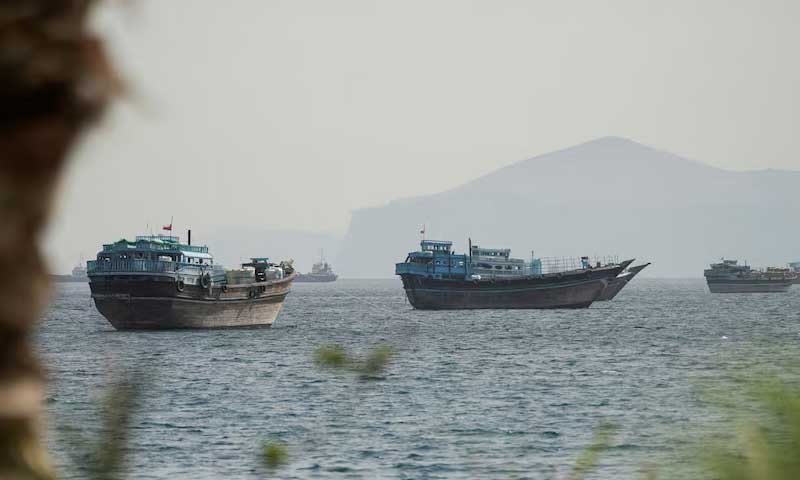

DUBAI: Oman has presented Iran with a Gulf-backed proposal to regulate shipping through the Strait of Hormuz, including a system of voluntary transit fees, as regional powers seek to stabilise one of the world’s busiest energy corridors, according to a Gulf source and a Western diplomat.
The initiative aims to restore confidence in maritime trade through the strategic waterway after months of disruption caused by the conflict involving the United States, Israel and Iran.
The proposal comes as US President Donald Trump said there were “good talks” taking place with Iran, while warning that Washington could resume military strikes if negotiations fail to produce results. Tehran, however, has denied that it is preparing to restart negotiations with the United States.
Earlier this month, Washington launched a renewed bombing campaign intended to weaken Iran’s control over the Strait of Hormuz, a route that carried roughly one-fifth of global oil and liquefied natural gas shipments before the conflict escalated.
Iran restricted access to the strait following US and Israeli attacks on February 28, allowing only its own vessels to pass. Although an agreement reached between Washington and Tehran last month partially reopened the shipping lane, the arrangement collapsed in early July after Iran targeted vessels using a maritime channel it had not authorised.
Iran has said it wants to manage the strait jointly with Oman, which controls the opposite shore, and charge service fees to ships using the route. Washington, however, wants shipping to return to the pre-war arrangement, under which vessels could pass freely without any payments, arguing that mandatory transit fees would be illegal.
Under the Omani proposal, Iran would not exercise sole control over the waterway and any transit fees would be voluntary, according to the Gulf source and Western diplomat.
The proposed mechanism is similar to the system used in the Strait of Malacca, where Indonesia, Malaysia and Singapore invite ships to make voluntary contributions to support navigation, environmental protection and search-and-rescue operations.
The Western diplomat compared the proposal to a voluntary carbon offset scheme for airline passengers, allowing shipping companies to contribute voluntarily rather than through mandatory charges.
The Gulf source said Iran had not formally responded to the proposal as of Monday evening. Omani officials met Iranian counterparts in Tehran over the weekend to discuss the initiative.
Iranian Foreign Minister Abbas Araqchi also discussed the Strait of Hormuz with his Omani and Saudi counterparts on Monday, stressing the importance of regional cooperation, according to Iran’s foreign ministry.
Trump expressed optimism that diplomacy could end the five-month conflict but warned that the United States would resume military strikes if negotiations failed.
“I think there’s a good chance that something could happen, and if it does, good. If it doesn’t, we go back to doing what we were doing two days ago,” Trump said.
Iran maintains that it has not sought new negotiations with Washington, accusing the United States of violating the framework agreement reached last month for talks aimed at ending the conflict.
Trump is scheduled to meet Israeli Prime Minister Benjamin Netanyahu in Washington on Tuesday. While Israel participated in the initial bombing campaign, it has not been directly involved in the subsequent diplomatic efforts, and recent relations between the two leaders have reportedly been strained.
The US president has also sought to restrain Israel from expanding military operations against Iran-backed Hezbollah in Lebanon, amid concerns such actions could complicate ongoing peace efforts.
Meanwhile, optimism over diplomacy pushed global oil prices lower. Brent crude futures fell by more than 2.5% to around $86 per barrel after an 8% decline a day earlier.
Washington and Tehran reached a framework agreement in June to hold talks by the end of August on key issues, including Iran’s nuclear programme. However, both sides continue to disagree over the interpretation of the agreement’s provisions concerning navigation through the Strait of Hormuz.
