

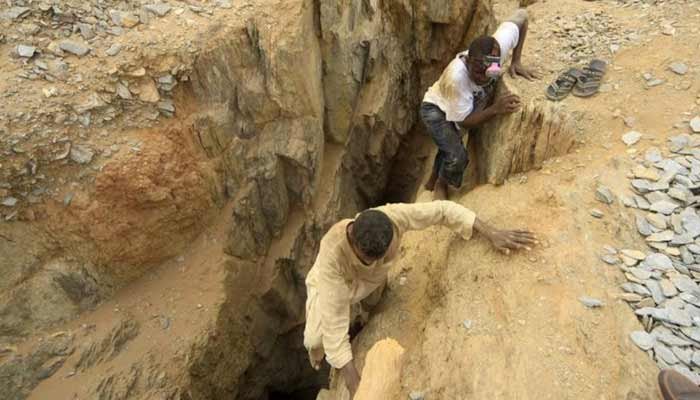

KHARTOUM: At least 60 people were killed after a gold mine collapsed in southern Sudan, with many more feared trapped under the rubble, two survivors told AFP on Wednesday.
The mine shafts at Al-Zaraa in West Kordofan began collapsing on Tuesday while dozens of small-scale miners were underground. By the following morning, rescuers had recovered 60 bodies.
“We don’t know how many more are still inside,” survivor Khair al-Sayyed Jabara told AFP, saying miners had worked through the night to search for survivors and recover bodies using rudimentary tools.
He said rescue efforts were hampered by the lack of heavy machinery needed to remove the rock and soil covering the collapsed shafts.
Another miner, Al-Amin Suleiman, said the mine’s shafts were located close to one another, meaning the collapse of one shaft triggered the collapse of neighbouring shafts.
“So far, 60 bodies have been pulled out, but there are people still trapped underground since yesterday,” Suleiman told AFP, adding that he did not believe those still trapped were likely to have survived.
Gold mining is widespread across Sudan, where much of the population has been pushed out of formal employment since war erupted in April 2023 between the Sudanese army and the paramilitary Rapid Support Forces (RSF).
Many young Sudanese have turned to artisanal and small-scale gold mining, often working in unregulated or abandoned mines under hazardous conditions.
Miners typically rely on hand tools and basic equipment for meagre wages and can also be exposed to dangerous chemicals, including cyanide and mercury, used in gold extraction.
Mine collapses are common in Sudan, particularly in abandoned shafts and unofficial mining areas where safety standards and rescue infrastructure are limited.
The greater Kordofan region is home to numerous informal mines, many of which consist of large, unsecured pits where young men work in search of gold.
West Kordofan is controlled by the RSF, which also holds large parts of the neighbouring Darfur region. The conflict has severely restricted access to equipment and emergency services in many parts of western Sudan, making large-scale rescue operations difficult.
The collapse highlights the dangers faced by workers in Sudan’s largely informal gold industry, which employs millions of people and remains a major source of income in the country.
Sudan is one of Africa’s leading gold producers. Industry figures say artisanal and small-scale mining employed more than two million people even before the war, while officials have said much of the country’s gold production is smuggled across borders.
Gold is reportedly transported through neighbouring countries including Chad, South Sudan and Egypt before reaching international markets, particularly the United Arab Emirates.
The conflict has also made the gold trade an important source of financing for the rival sides. The United Nations has repeatedly warned that control over natural resources is helping sustain the war economy.
The European Union and Britain announced sanctions in July targeting networks linked to Sudan’s illicit gold trade. Britain said the networks were involved in financing weapons procurement, military operations and armed groups involved in the conflict.
Meanwhile, rescue workers and fellow miners continued searching the collapsed site on Wednesday, with the final death toll expected to rise if more bodies are recovered from the mine.
